МЕЛИК-ПАШАЕВ
Thumbelina
Thumbelina
Couldn't load pickup availability
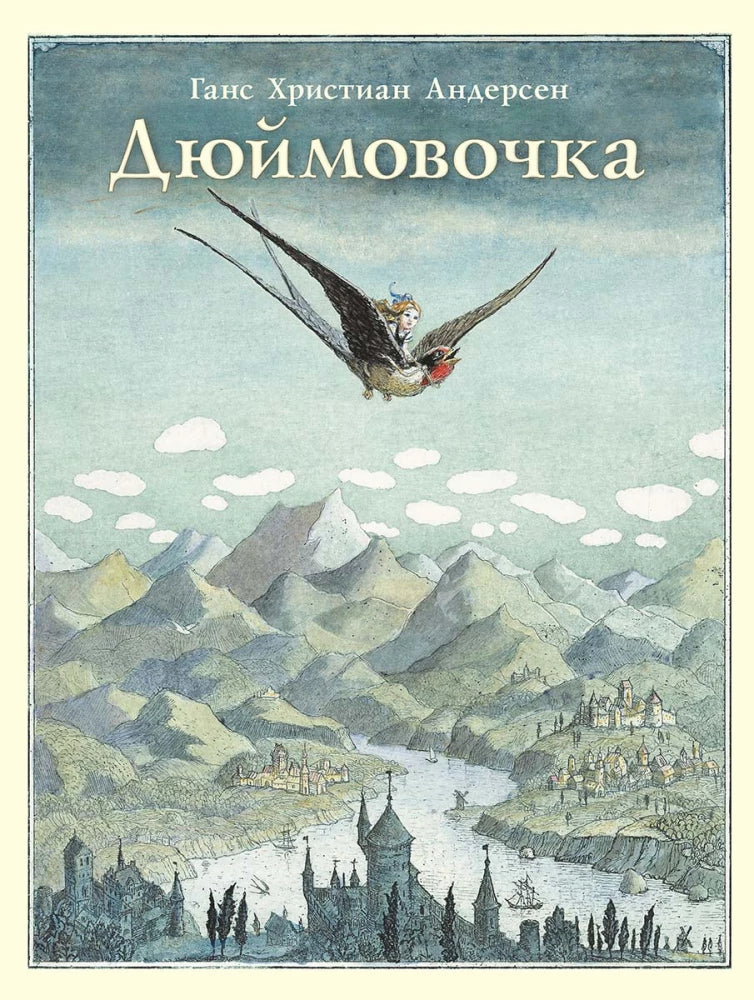
Like most stories by the great Danish storyteller, the fairy tale of Thumbelina is not borrowed from folklore but was personally conceived by the author.
A lonely woman longs for a child and seeks help from a sorceress. The sorceress gives her a barleycorn, from which grows a flower with a tiny girl inside – Thumbelina. But Thumbelina is not destined to live a carefree life in her mother's home. First, she is kidnapped by a toad, then she falls into the clutches of a May beetle, and finally, she becomes engaged to a wealthy mole. Fortunately, the girl is saved by a swallow, whom the kind-hearted Thumbelina herself once saved from death. The ending of the magical tale is predictable: Thumbelina will be rewarded for her meekness and generosity. She will find her happiness in a beautiful garden and marry an equally miniature and handsome king of the elves.
In the first translations into Russian, the fairy tale "Thumbelina" was called "Lizok-s-vershok" (Little Lizzie-an-inch-tall). The word "Dyuimovochka" (Thumbelina) was coined by the remarkable Russian translator Anna Ganzen. Together with her Danish husband, Peter Ganzen, she translated all of Andersen's fairy tales into Russian at the end of the 19th century, and these translations are still considered the best to this day.
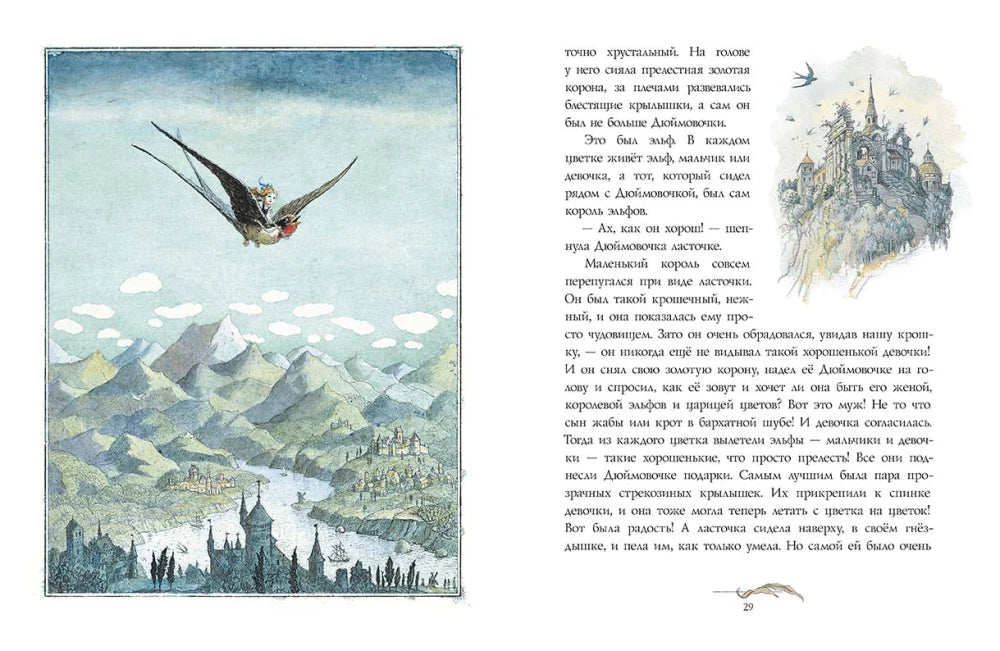
After the revolution, Andersen's translations by Peter and Anna Ganzen began to be ruthlessly distorted. In our book, the translation is published in its original, pre-revolutionary version. And it is accompanied by magnificent illustrations by Boris Diodorov, which are rightfully considered among the best in the world.
Поделиться