МЕЛИК-ПАШАЕВ
The Adventures of Tintin: The Black Island
The Adventures of Tintin: The Black Island
Couldn't load pickup availability
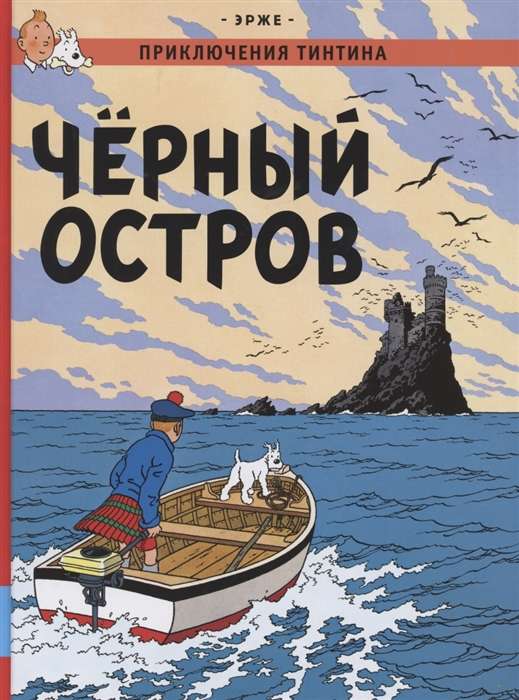
Returning from South America, Tintin takes on a new puzzle. This time his path leads to Britain, where an unmarked plane has just crashed. The day before, Tintin had already seen this plane, and an encounter with the pilots nearly cost him his life. In England, Tintin barely escapes the ominous Dr. Müller, who turns out to be the leader of a gang of counterfeiters. Tintin must find the underground printing house where the criminals are printing fake banknotes. All clues lead to Scotland, to Black Island, which has a notorious reputation. There, in the ruins of Ben More Castle, lives a monster, supposedly devouring anyone who dares to disturb its peace. Tintin takes a boat and sails there…
"The Black Island" is the only book in "The Adventures of Tintin" that exists in three different album versions (plus another magazine version, the very first, which was published as a "serial" in 1937-1938). The first black-and-white version is from 1938; the second is the 1943 color version, and the third is the completely redrawn 1965 color version. Moreover, it was not Hergé who redrew it, but his assistants, primarily Bob de Moor and Roger Leloup. Hergé only supervised the process, and even then, only casually, as he was busy with the current album and was not eager to return to a 30-year-old plot. The redrawing was prompted by the demand of the English publisher of the series, who considered the 1943 version outdated and full of minor details that did not correspond to reality (the action, after all, takes place in Britain!). The British presented Hergé with a list of more than 130 corrections, after which Hergé decided it would be easier to redraw everything from scratch. It is believed that the redrawing, although it greatly increased accuracy, destroyed the charm of the first color version. And this is despite the fact that Bob de Moor and Leloup are brilliant artists. But Hergé was more than just a "brilliant artist." However, it was the third version that was chosen by the publisher as the base and it became part of the classic series. Both previous versions, however, are also quite accessible in facsimile form (luxury editions on expensive, high-quality paper).
Поделиться